
Tuesday, May 19, 2026
Scarpaci Exemplifies JLG Architects’ Commitment to Hockey
Applications for 2026 Scholarship Due June 1
JLG Architects’ commitment to athletics runs deep, especially in youth and college hockey communities across the country. As a proud supporter of the game at every level, JLG has helped shape the future of hockey both on and off the ice through world-class facility design and continued investment in student-athletes.
The College Hockey Inc. Scholarship, presented by JLG Architects, is a $2,500 postgraduate scholarship awarded annually to an NCAA hockey student-athlete who is helping grow the game through their support of the next generation of hockey players.
For more than 36 years, JLG has established itself as the nation’s premier expert in ice arena design, creating high-performance athletic facilities and unforgettable fan experiences. JLG’s impact on college hockey can be seen nationwide through projects like Sacred Heart’s Martire Family Arena, Augustana’s Midco Arena, Colorado College’s Ed Robson Arena and many more.
Click HERE to apply for the 2026 College Hockey Inc. Scholarship, presented by JLG Architects. Application deadline is June 1, 2026, and is open to all college hockey players who have exhausted their eligibility in 2025-26 and will continue their education.
“Take in everything you can, enjoy the process, and leave things a little better than you found them.”
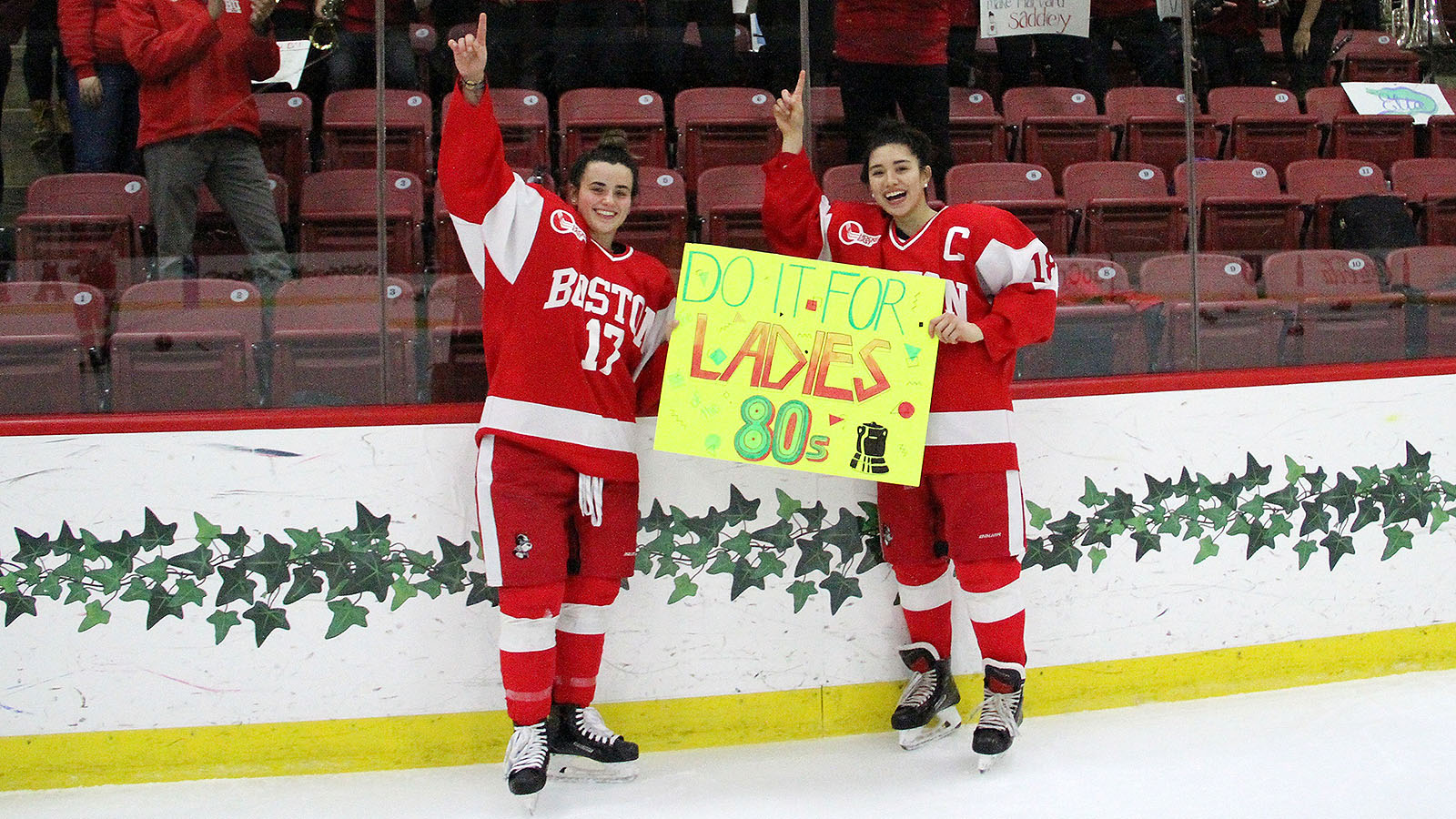
The inaugural scholarship was given in 2020 to Boston University D Breanna Scarpaci (Washington, Mich.). Since receiving the scholarship during her first year of graduate school, Scarpaci earned her doctorate in physical therapy from Boston University in 2023, completed an orthopedic residency at the University of Chicago, and returned to Boston in 2025 to continue her career. We caught up with Breanna to discuss the impact the scholarship and hockey have had on her life after college athletics.
How did receiving this scholarship influence or support your professional journey, during or after your time in college hockey?
Receiving this scholarship came at a really important moment for me. I was shifting from being a full‑time collegiate athlete to being a full‑time graduate student, and that transition felt a bit like a change of identity. Hockey had been such a major part of my life for so long, and suddenly it took on a smaller, different role while I focused on earning my doctorate in physical therapy. What the scholarship really gave me, beyond the financial support, was the space to look back and appreciate the impact the sport had on me, and the impact I was able to make on it. It reminded me that even though I wasn’t on the ice every day anymore, the years I spent in the game mattered, especially for the younger generations coming up behind me.
Now that I’m a full‑time clinician, that same sense of gratitude shows up daily. I try to bring that same encouragement and belief in people that hockey gave to me. Whether it’s a patient recovering from an injury or someone trying to hit a personal milestone, I want them to feel supported and capable of reaching whatever goal they are chasing.
When you look back at your college hockey career at BU, what moment or experience stands out as your favorite(s)?
The first thing that comes to mind looking back at my college hockey career at BU is winning the Beanpot in 2019. It was the first time our program had ever won it as a DI team, so it felt monumental. The first round went to a shootout against Northeastern, the final stretched into overtime, and the whole game had this electric, storybook feel to it. The rink was packed, and BU even sent student buses over for anyone who wanted to come. It was a Tuesday night in February, but it felt like the biggest game I’ve ever played in.
While winning the Beanpot was amazing, the everyday memories stick with me just as much. The 6 a.m. pool workouts, packing up for road trips, racing to the dining hall after practice to get in line for lobster night- these are the things that don’t make headlines but make a team feel like family. Sharing all of it with my best friends, Tasz, Dez, and Ali, is what made BU feel like home and gave me some of my favorite years.
How has your hockey experience influenced how you approach your current field?
Spending more than 20 years playing hockey taught me to show up every day, work hard, and stay connected to a team, even as my role evolves. Those lessons carried directly into my career as a physical therapist. Empowering my patients is at the forefront of my treatment approach, and so much of that comes from understanding what it feels like to chase big goals, hit setbacks, and slowly rebuild confidence in your body and its abilities. There’s a natural overlap between being an athlete and being a clinician: the discipline, the resilience, the belief that progress is possible even when it’s slow. Hockey strengthened these beliefs within me, and now I’m fortunate enough to pass them on to my patients.
What advice do you have for other student-athletes transitioning from college sports to pursuing further education?
My biggest piece of advice is to give yourself permission to acknowledge that the transition is a big one. Pursuing further education after a successful college career is something to be proud of but stepping away from a sport that shaped your identity for so long can feel overwhelming. It certainly did for me.
What helped was to stay grateful for everything hockey gave me, the discipline, the resilience, the community, and realizing that those qualities don’t disappear when you stop competing. They stay with you as you transition into graduate-level education and eventually into your career.