
Friday, June 12, 2026
Navigating the Women’s Hockey Recruiting Process
June 15 Marks the Start, Not the End of the Journey
By Sadie Lundquist and Jayson Hajdu
June 15 is approaching, and the prospect of playing college hockey should be an exciting one for aspiring young players. The time spent on campus, in an elite athletic environment, will help shape an individual’s future both on and off the ice.
But the process can also be daunting for players. Only a fraction of the best high school athletes will move on to NCAA DI hockey. It’s also a challenging time for those who help inform an aspiring student-athlete’s decision-making, including parents, youth coaches, mentors and others.
June 15 following a player’s sophomore year of high school is the first day Division I women’s hockey coaches can contact prospective student-athletes, and the date marks the start, not the end, of the recruiting journey. In fact, it is not until Aug. 1 that a player can take part in an official visit on campus. The core of the recruiting process does not happen in one day, one month or sometimes even one year, and it certainly does not end on June 15.
College Hockey Inc. endeavored to reveal the answers to these questions – and more – when it surveyed the NCAA Division I women’s hockey player population prior to the 2025-26 season.
The responses were instructive, revealing common themes for aspiring college hockey players who have gone through the recruiting process. Those themes included the average commitment age, the process itself, development paths that included playing boys hockey, multi-sport athletes, and more.
The Study
Of the approximately 1,200 NCAA Division I women’s hockey players rostered for the 2025-26 season, roughly one-quarter (253) of those student-athletes responded to the survey and provided their insights to College Hockey Inc.
More than 24 schools from all five Division I women’s conferences were represented by the respondents, including players from eight different countries.
Respondents By Grade:
- Freshmen – 36%
- Sophomores – 23%
- Juniors – 23%
- Seniors/Grad. Students – 18%
Respondents by Position:
- Forwards – 51%
- Defense – 35%
- Goaltenders – 13%
The Insights:
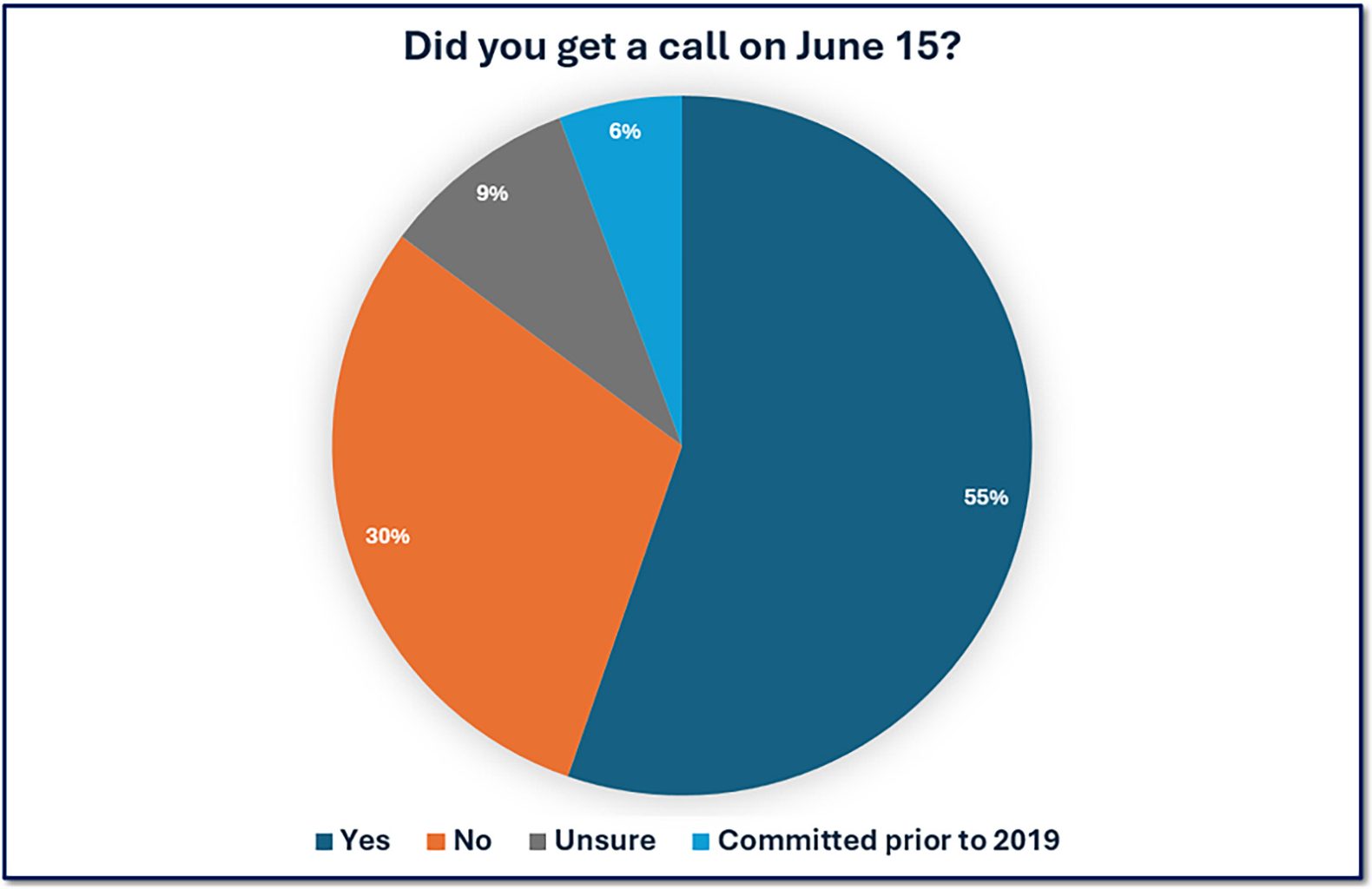
Yes, 55% of players received a recruiting call on June 15, but roughly 40% did not and still achieved their goal of playing Division I college hockey. If June 15 comes and goes without a call, remember that your recruiting journey is far from over. Focus on your own development, explore the opportunities in front of you, and know that one day does not define your future in the sport. The average age a girl will earn her NCAA Division I commitment is 17. To be more precise, 17.04 for skaters and 17.32 for goalies.
It’s also worth noting that the current recruiting rules were adopted in 2019, and a handful of survey respondents committed before those changes took effect. Regardless of the era, the message remains the same: there is no single path to playing NCAA Division I hockey.
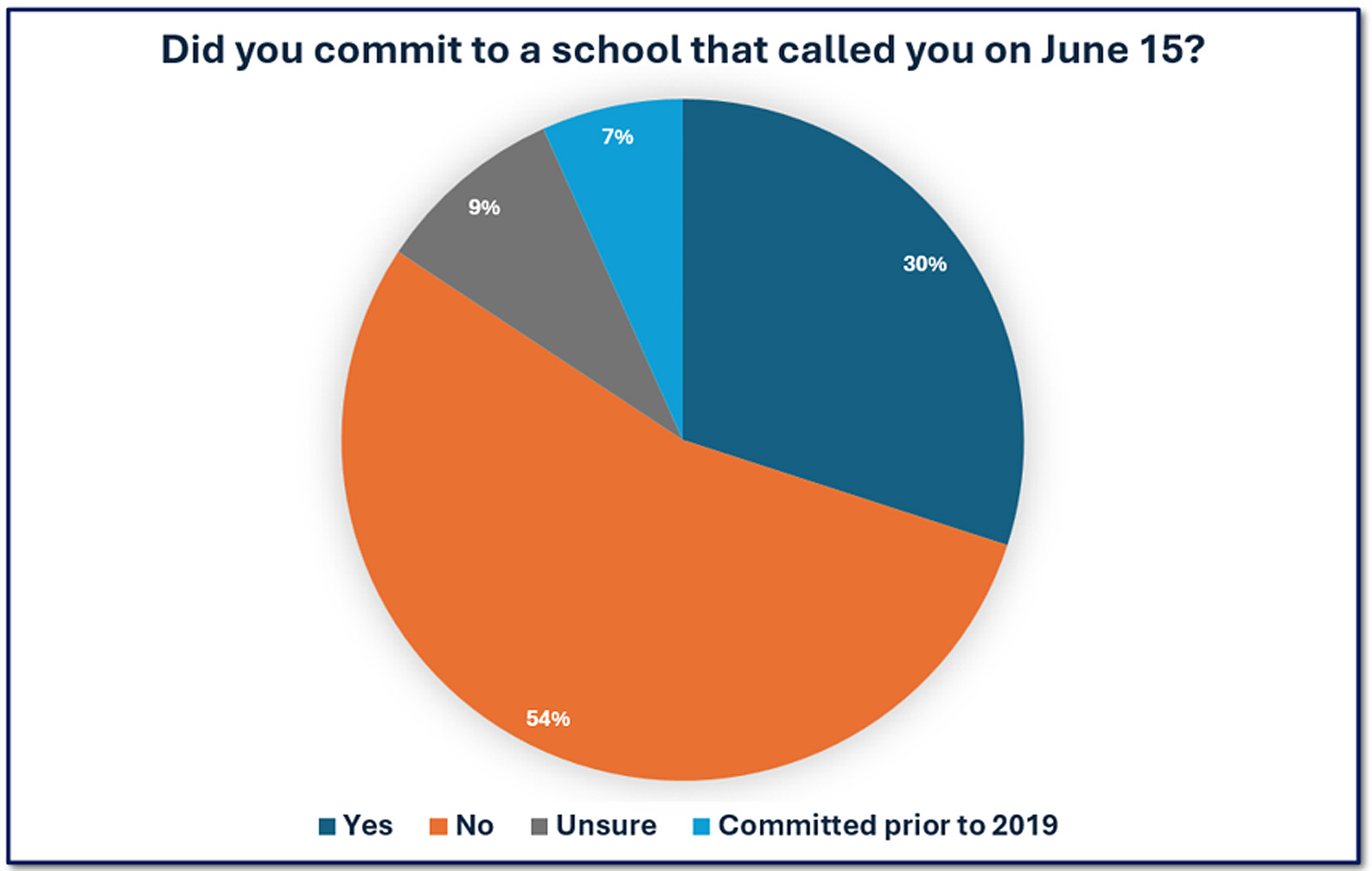
Narrowing in on the 55% of players who did receive a recruiting call on June 15, more than half ultimately committed to a different school than one of the programs that contacted them that day. Recruiting is a long process, and both the player and the program need time to determine whether there is a true fit.
Whether you receive a call on June 15 or not, take the time to evaluate all the factors that matter when choosing a college. Academics, athletics, campus culture, school size, location, proximity to home and other opportunities all play an important role in finding the right fit for your future.
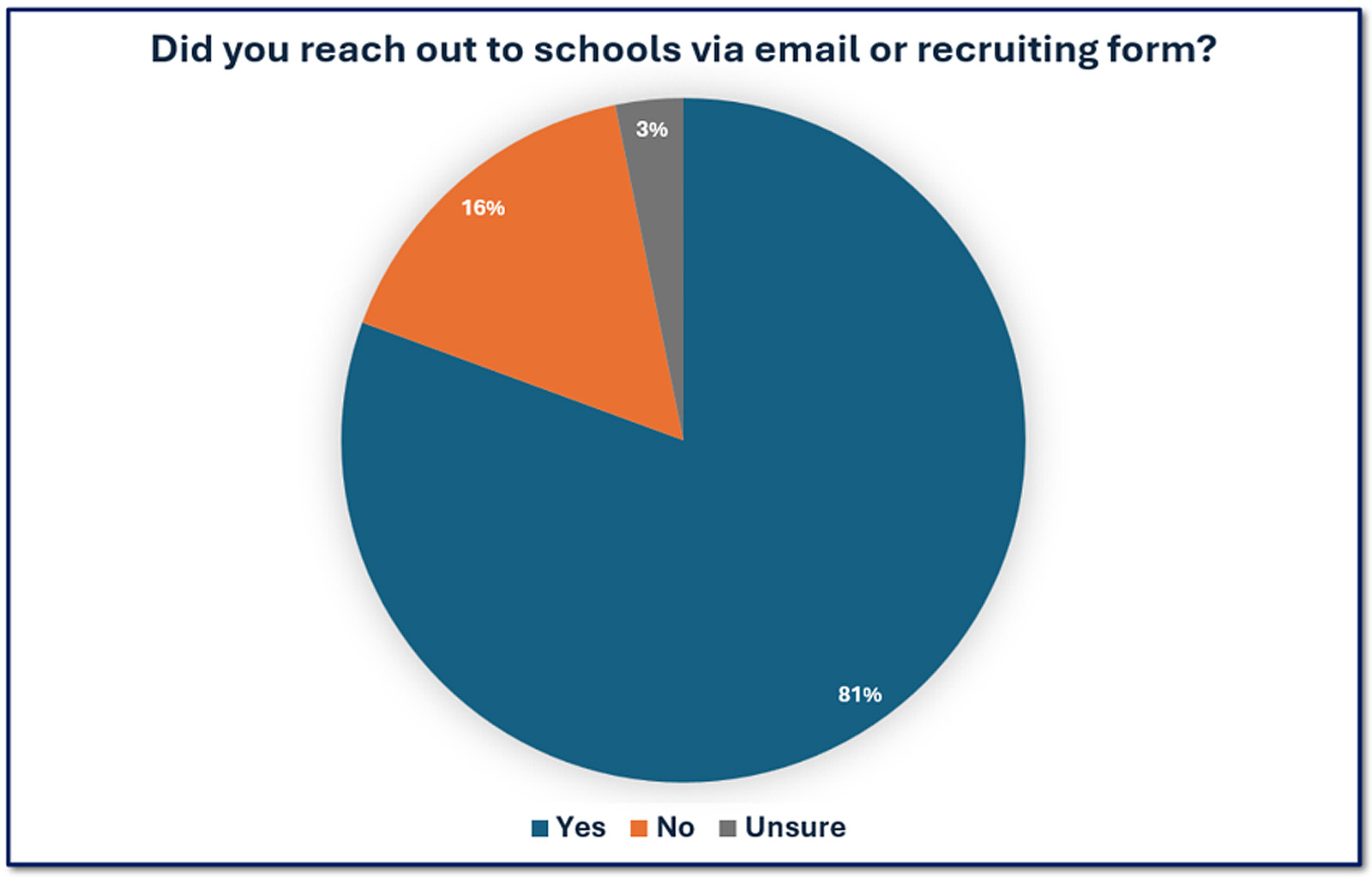
Be your biggest advocate and show initiative—nearly 81% of players reported reaching out to schools during the recruiting process.
If you’re going to reach out, do it intentionally. Take time to research the school and the program so you understand why it could be a good fit for you. Personalize your communication based on the coaches, the team, and specific reasons you resonate with the program, school, and campus. Most importantly, be yourself.
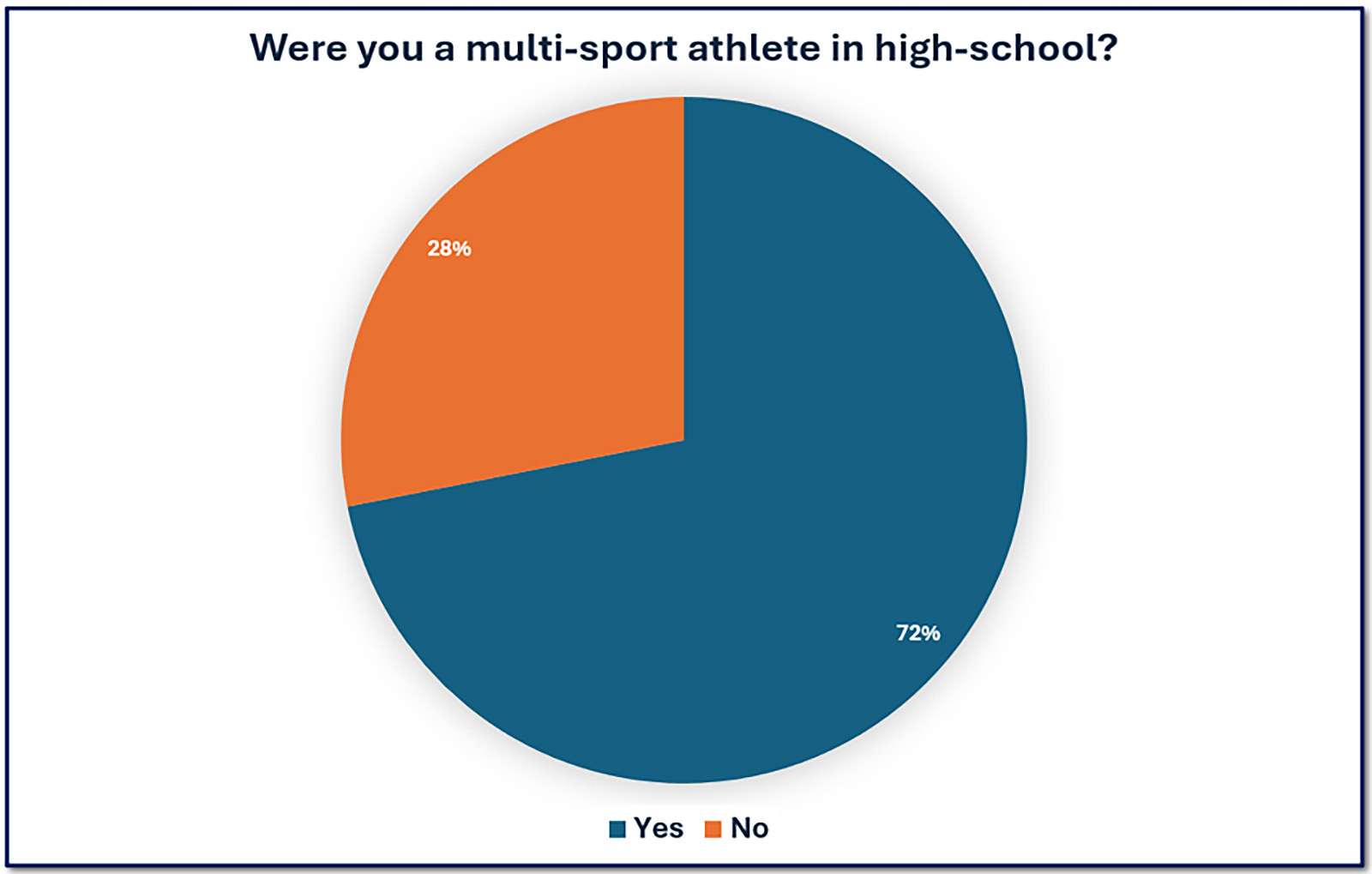
A common question from young athletes is whether they should focus solely on hockey. While there is no right or wrong answer, 72% of the players in this survey reported playing at least two sports throughout high school.
If you love soccer, keep playing. If you love volleyball, keep playing. Many hockey players, such as Lee Stecklein and Kelly Pannek, attribute their success to being well-rounded through participation in multiple sports and activities.
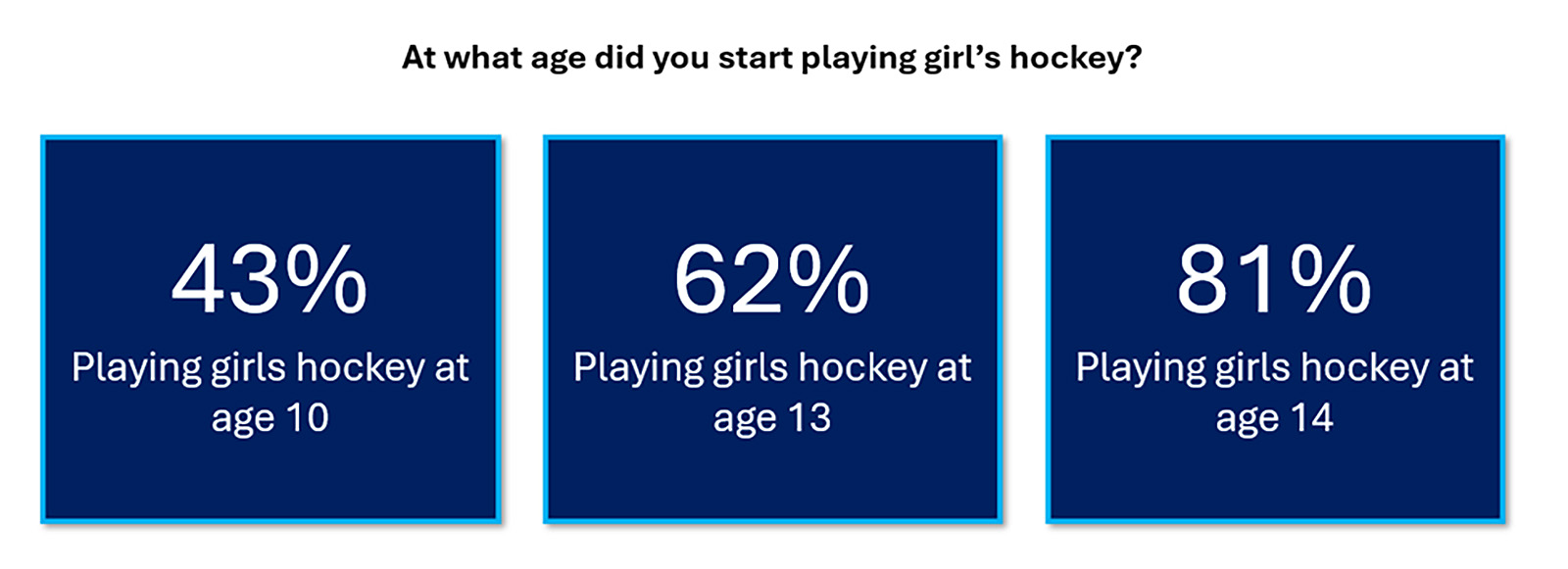
Perhaps one of the most difficult questions for young players and parents pursuing the college hockey dream is what will set an athlete up for the most success. That often leads to the question: should I play girls hockey?
With the continued growth of the game, 81% of current college players reported playing on all-girls teams by age 14. While not every player around the world has equal access to girls hockey opportunities, the study shows that most college players who do have that option do compete on girl’s teams throughout their development and playing careers.
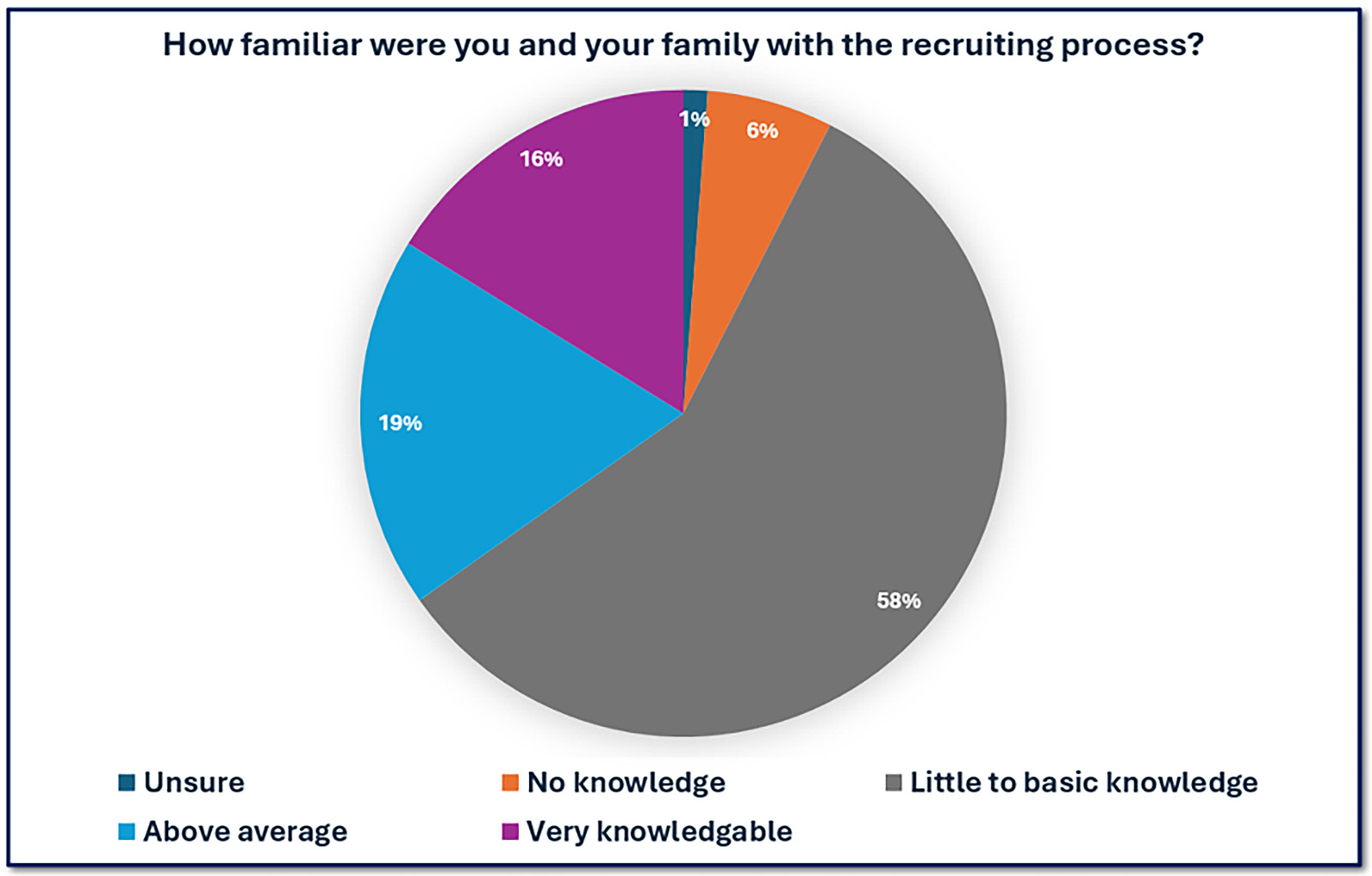
Finally, more than 60% of players and parents reported having zero-to-basic knowledge of the recruiting process—and that’s okay.
Recruiting can feel like a long, complicated journey where everyone else seems to know more than you do. In reality, the process is complex for everyone, and many of the players successfully navigating it are learning along the way. A lack of recruiting knowledge early on does not prevent athletes from reaching the next level of college hockey and the average commitment age is over 17 years old.
Final Thoughts:
While June 15 is an exciting milestone, it’s important to remember that it marks the beginning of the recruiting journey—not the end. Players often feel pressure to keep pace with peers who receive communication and offers early in the process. Yet nearly half of all Division I players do not receive a recruiting call on the first day coaches are permitted to make contact. So be your own biggest advocate and focus on your journey and what you can control.
Several players emphasized the importance of staying open-minded throughout the recruiting process and resisting the urge to compare their experiences to others.
“Give every school a fair chance to show their interest,” said one freshman player. “You never know which school will be the perfect fit. Do your research and ask questions. This is your process, your future and, most importantly, your decision.”
Another freshman acknowledged the anxieties that can come with recruiting but encouraged players to embrace the experience.
“The best way to look at it is that this is only going to happen once in your lifetime so enjoy it and make the best of it,” she said. “Know that not everyone’s process is going to look the same and that’s okay. Don’t worry about what other people are doing or what they are getting. Focus on your own process because everything will end up working out.”
But the ultimate payoff to a successful NCAA Division I career is multi-layered: graduating with your degree, reaching your full potential as a player and person, and having the unique experience of being a student-athlete on a college campus.
“Not only has it pushed me as a player on the ice to become the best player I can be, but it has also helped push me off the ice, too,” one senior defenseman told College Hockey Inc. “Helping me learn how to manage my time, how to live alone and be independent, and how to persevere through hard times.”