NCAA Women’s Hockey Recruiting
Recruiting is an exciting – but often confusing – process for prospective student-athletes considering a college hockey career. The prospect of playing college hockey should be an exciting one for aspiring young players. The time spent on campus, in an elite athletic environment, will help shape an individual’s future both on and off the ice.
June 15 following a player’s sophomore year of high school is the first day Division I women’s hockey coaches can contact prospective student-athletes, and the date marks the start, not the end, of the recruiting journey. In fact, it is not until Aug. 1 that a player can take part in an official visit on campus. The core of the recruiting process does not happen in one day, one month or sometimes even one year, and it certainly does not end on June 15. In fact, the average commitment age of a DI women’s player is just over 17 years of age and for goalies, it’s 17.5.
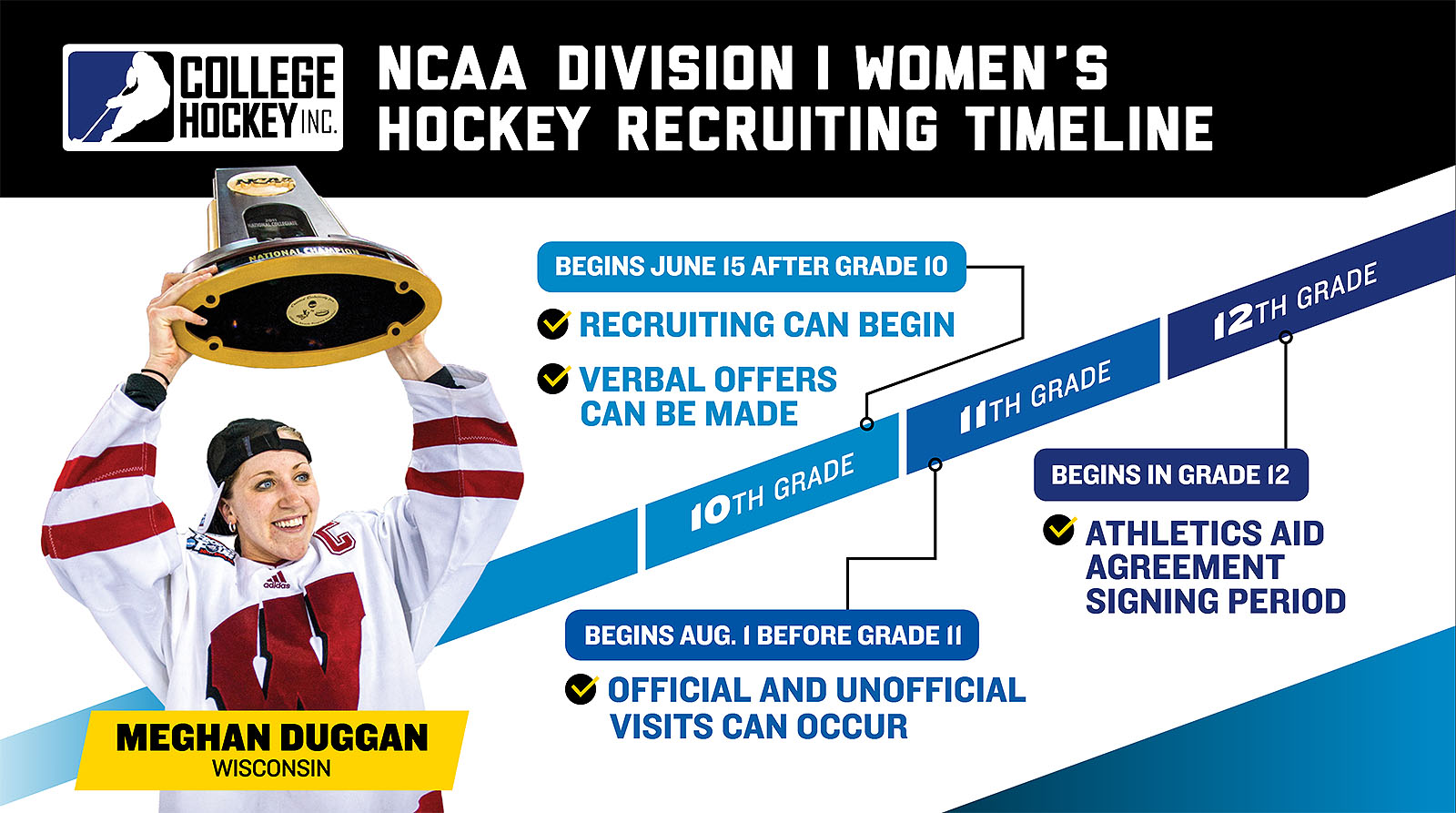
* The WIH committee has proposed legislation that would move the recruiting timeline for initial contact and official visits from June 15 into September. More information will be provided as legislation is passed. This change will impact prospective student-athletes who will be sophomores (Grade 10) during the 2026–27 school year and younger.
Research Article: Navigating the Process
Many prospective college hockey players wonder what they can do to get noticed by college recruiters. College hockey coaches spend a tremendous amount of time and energy scouting and recruiting potential student-athletes, but it’s encouraged to advocate for yourself as well.
First, understand the landscape of college hockey and the five DI women’s conferences. We recommend making a list of the schools you’re interested in and visiting their respective websites (women’s programs) to learn more about the school, program, coaches and campus. Most college hockey teams have a recruiting questionnaire on their team websites, and you can fill those out as early as your freshman and sophomore year ahead of the recruiting calendar. But remember, coaches cannot contact you back until June 15 following your sophomore year of high school.
Create a hockey resume that includes your information, graduation year, upcoming schedule, and your coaches’ contact information. If you’re going to reach out to a program, do your research. Personalize your message based on the coaches and the program and note why you’re interested in the school, campus, and the hockey program.
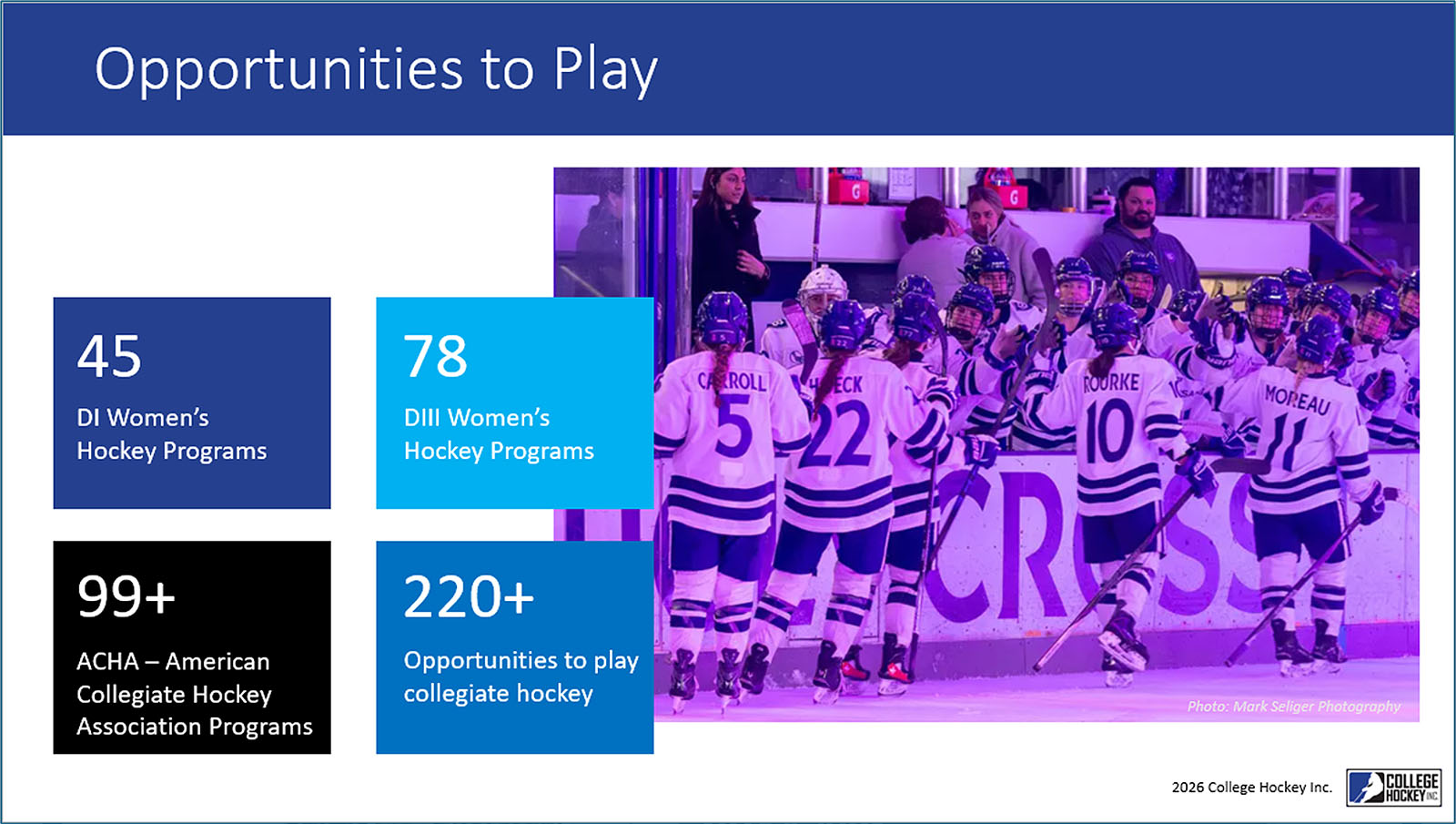
Understand there are more than 200 opportunities for young women to play college hockey across NCAA Division I, NCAA Division III, and the ACHA (American Collegiate Hockey Association). We strongly encourage players to understand all the opportunities available to continue playing after high school. Note the recruiting process for NCAA DIII and ACHA differs from the DI information above.